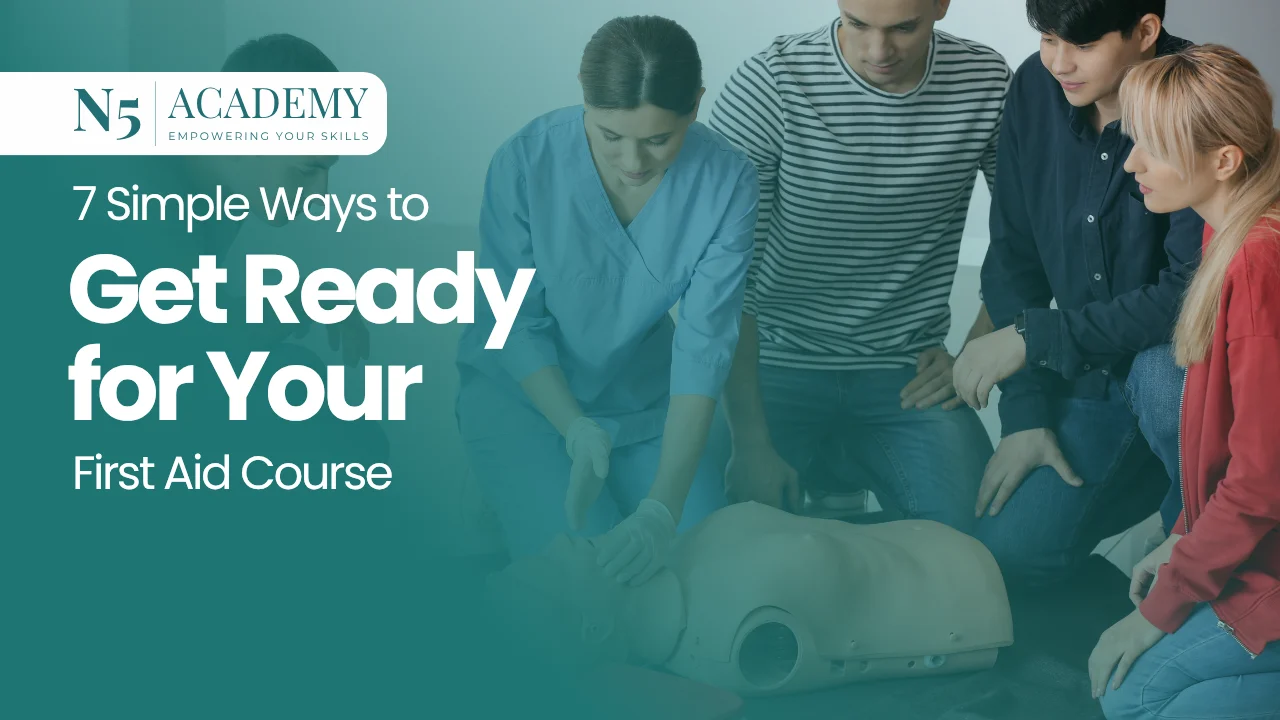

Getting ready for your first aid course can feel a bit scary, especially if it’s your first time. But don’t worry. With the right mindset and some preparation, you’ll enter your training feeling calm and confident. This guide will help you, whether you’re going for a workplace session or personal knowledge.
A first aid course does more than just give you a certificate; it prepares you to help in emergencies. The more you know before you start, the more confident you’ll feel.
Here are 7 simple ways to help you feel ready for your first aid course. These tips cover what to wear, what to bring, and what to expect after certification. Whether you’re taking our First Aid at Work Course or the Emergency First Aid at Work Course, these suggestions will help make your experience better.
1. Understand the Course You’ve Booked
Know What You’re Signing Up For
First, it’s important to know what type of first aid training you’ve signed up for. First aid courses vary in content, length, and goals. Are you taking a 1-day Emergency First Aid at Work Course or a more in-depth 3-day First Aid at Work Course? At N5 Academy, we provide different options to match various workplace needs and roles.
Here’s a helpful breakdown to include in your first aid course checklist:
- Emergency First Aid at Work (1 Day): This course is for employees in low-risk places like retail shops, offices, or libraries. You’ll learn how to handle common emergencies, including CPR and helping unconscious people.
- First Aid at Work (3 Days): This course is for higher-risk jobs like construction, manufacturing, or hospitality. It covers more situations and includes assessments.
- Paediatric First Aid Training: This training is for nursery and school staff or anyone working with children. It covers emergencies specific to kids, such as choking, febrile seizures, and allergic reactions.
- Basic Life Support Training: This short course focuses on CPR, using an AED, and responding to choking. It’s ideal for dental offices, gyms, or health clubs.
Find out about our First Aid at Work and Emergency First Aid at Work courses.
Before the course, review your joining instructions. Check the venue address, start time, and if you need to bring ID or a confirmation email. This simple step can help you avoid last-minute stress!
2. Dress Comfortably for Practical Learning
This Isn’t a Fashion Show; It’s a Learning Experience
First aid training requires movement. You will bend, kneel, lift, and sometimes lie on the floor to practise techniques like the recovery position and CPR. That’s why wearing comfortable clothes is important.
We recommend the following attire:
- Loose-fitting, breathable clothes.
- Flat, closed-toe trainers or sneakers.
- Layers (e.g., T-shirt with a zip-up hoodie) for changing room temperatures.
Avoid wearing:
- Dresses or skirts (they make kneeling and floor-based activities awkward).
- Heels, sandals, or any open-toed footwear.
- Jewellery or accessories that can get caught or cause discomfort.
Your comfort affects how well you engage in the course. If you’re always adjusting your clothes or worrying about your appearance, you can’t focus on learning. Many first aid training guides don’t mention this, but it can really help.
Consider bringing a small towel or yoga mat if you’re concerned about practising CPR on hard floors.
3. Bring the Right Essentials with You
Pack Like a Pro and Plan for the Day
Most training providers, like N5 Academy, will give you the learning materials and manikins you need. However, it’s good to bring a few important items.
Check out this improved first aid course checklist:
Must-Haves:
- A notebook and pen for handwritten notes (writing helps with memory!).
- A reusable water bottle to keep hydrated.
- Snacks or a packed lunch if the course doesn’t include catering.
- Valid ID and course confirmation email (if requested).
Optional but Smart:
- Hand sanitiser and tissues.
- A hair tie or clip if you have long hair.
- A lightweight jumper or jacket.
- A small cushion or kneepad for floor exercises.
Advanced Extras:
- A printed copy of the course outline.
- Sticky notes or highlighters for key sections in your manual.
- A wristwatch with a second hand for CPR timing practise.
These small additions can make your workplace first aid preparation easier, more comfortable, and less stressful.
4. Brush Up on Basic First Aid Knowledge
Get Familiar with the Fundamentals Before You Arrive
You don’t need any experience to take most first aid courses. However, looking over some basic ideas in advance can help you feel more confident and involved.
Here are a few things you can read or watch videos on:
- The DR ABC approach: Danger, Response, Airway, Breathing, Circulation.
- CPR compression rates and technique.
- The recovery position and when to use it.
- Basic wound treatment, burns, and choking.
Trusted websites like NHS.uk, Red Cross, and St John Ambulance offer easy-to-understand content. You can also explore our N5 Academy blog archive for real-world examples and helpful tips.
Getting to know important terms and steps like checking for breathing, calling 999, and starting compressions makes it easier to learn and remember new information.
Learning is more effective when you have some basic information to build on.
5. Arrive Early and Be Mentally Prepared
Arrive Early, Stay Calm, and Embrace the Experience
A calm mind learns better. We suggest getting to your course at least 15–20 minutes early. This gives you time to:
- Find the venue without stress.
- Grab a tea or coffee if it’s available.
- Settle in and get to know your trainer and fellow learners.
Being mentally prepared means ignoring outside distractions for the day. Turn off app notifications, silence your phone, and focus on why you’re really there.
Helpful mindset shifts before your course:
- “This is a chance to learn something useful, not a test.”
- “Everyone here is learning; I don’t need to be perfect.”
- “Even one thing I learned today could help me save someone’s life.”
Journaling a short goal the night before your training, like “I want to feel more confident in emergencies,” can improve your experience.
6. Engage Fully During the Course
Ask Questions, Practise Often, and Make the Most of It
First aid courses aren’t just about meeting requirements; they’re interactive and hands-on. The more you participate, the more you remember.
Here’s how to get the most out of your training day:
- Ask questions if you’re unsure about a technique.
- Don’t be afraid to ask for extra practise time.
- Volunteer in demonstrations.
- Take part in all group activities and role-play scenarios.
Courses at N5 Academy are designed to provide a friendly and relaxed learning space. You won’t be graded; instead, you’ll learn skills that can help friends, coworkers, or even strangers.
Your confidence will increase with each practise session. In the 3-day First Aid at Work Course, you’ll get more chances to practise real-life emergencies with some guidance.
Take breaks as needed, but stay focused.
7. Know What Happens After Your Course
Certification, Refresher Planning, and Ongoing Readiness
You’ve completed the course, now what?
Once you complete the course, you’ll get a certificate that lasts for three years and meets national standards. However, first aid skills can fade over time, so your learning doesn’t stop here.
Your after-course to-do list:
- Save a digital and printed copy of your certificate.
- Share it with your employer or upload it to HR systems.
- Add it to your CV and LinkedIn to showcase your credentials.
- Set a calendar reminder for 2.5 years later to book a refresher.
Continue practising what you’ve learned, even if only mentally:
- Walk yourself through scenarios occasionally.
- Review your course notes every few months.
- Encourage your workplace to hold informal refreshers or drills.
If you’re feeling inspired, think about adding new skills. Check out our Fire Marshal Course, Traffic Marshal Course, or Paediatric First Aid course if you work with kids.
Workplace First Aid Prep – What Employers Should Know
If you’re a manager or business owner setting up first aid training for your staff, here are some important steps to help your employees learn effectively.
Before the Course:
- Make staff aware of what to expect (content, timings, dress code).
- Provide time off without workplace distractions or expectations.
- Encourage questions and support their attendance.
After the Course:
- Review the certificate and training outcomes with them.
- Update your workplace first aid policy accordingly.
- Stock the first aid kit with their feedback in mind.
- Rotate responsibilities if multiple staff are trained.
The goal is to build a culture that prioritises safety and readiness. First aid should be seen as a valuable skill, not just a requirement.
Your Lifesaving Journey Starts Here
First aid training isn’t just another task; it’s an opportunity to confidently respond in emergencies. Your actions during road accidents or workplace incidents could help someone return safely to their family.
By following our first aid training guide and checklist, you’ll be ready and prepared for your training.
You’ll leave with a certificate and the peace of mind that comes from knowing how to assist in critical situations.
Choose N5 Academy for Trusted, Friendly, and Professional Training in the UK:
- First Aid at Work Courses
- Emergency First Aid at Work Course
- Paediatric First Aid Training
- Basic Life Support Training
- Fire Marshal and Fire Safety Course
- Traffic Marshal Course