

Construction shapes our cities, from tall skyscrapers to quiet streets. In this busy environment of scaffolding, machinery, and skilled workers, safety must always come first. With many moving parts and potential dangers, a safe worksite is not just a legal obligation but also a vital promise to protect every worker’s life.
This guide outlines the top 15 safety practises for construction workers in the UK. These are essential habits that protect teams, boost morale, and ensure compliance with safety laws. Whether you’re laying bricks, managing a team, or operating machines, these strategies will keep everyone safe and operations running smoothly.
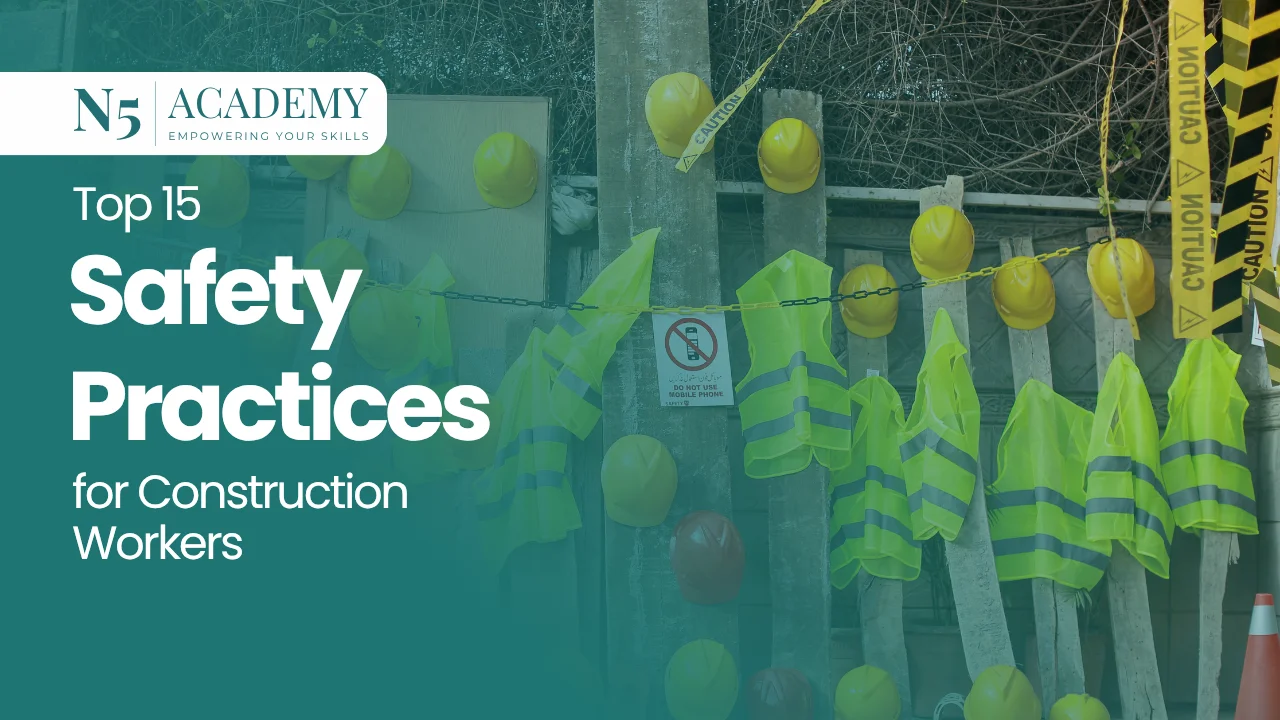
1. Wear Personal Protective Equipment (PPE) At All Times
Personal Protective Equipment (PPE) is your daily gear on-site. It protects you from hazards. UK law requires PPE on construction sites, but it’s also crucial for keeping you safe.
Standard PPE includes:
- Hard hats protect your head from falling objects.
- High-visibility jackets to make you easily seen in busy areas.
- Steel-toed boots to prevent foot injuries.
- Heavy-duty gloves for hand safety.
- Protective goggles to shield your eyes from debris.
- Ear defenders to protect your hearing from loud noise.
Pro Tip: Make sure your PPE fits properly to work well. Loose gloves or a helmet can be dangerous. Always check your gear before starting work and report any damaged equipment right away.
2. Complete Regular Safety Training
No one is born knowing how to stay safe on a construction site. Training turns regular workers into safety-minded professionals. Frequent courses give updates on safety laws, emergency actions, and useful on-site precautions.
At N5 Academy, we offer expert-led first aid and emergency first aid courses designed for construction workers. These courses are essential for following safety regulations and handling emergencies.
Why is this important? Workers with current training can spot risks, react to emergencies, and prevent dangerous mistakes that could lead to injury or death.
3. Conduct Daily Risk Assessments
Every day on-site brings new risks. Weather changes, deliveries happen, and new buildings go up. That’s why a single assessment isn’t enough.
Daily risk assessments help to:
- Identify and fix trip and slip hazards.
- Check electrical systems for problems.
- Evaluate work-at-height areas.
- Clearly mark routes for moving equipment.
Extra Tip: Encourage everyone on the team to join in these checks. Those who use the tools often notice dangers others might miss.
4. Use Proper Signage and Barricades
On a noisy construction site, clear communication is essential. Signs and barriers are more effective than words, especially when time is short and distractions are around.
Use clear, weatherproof signs to show:
- Dangerous areas (like live electrical zones)
- Required PPE
- Restricted zones
Put up sturdy barricades or temporary fencing to secure dangerous areas, such as trenches and places where cranes are used or demolition is happening.
Don’t cut corners with makeshift signs, as they can confuse people. Use HSE-approved formats for clarity and legal compliance.
5. Secure Working at Height
A mistake on a scaffold can be deadly. Working at heights is a major risk in construction, especially in tall buildings or roofing jobs.
Safety measures should include:
- Fall arrest systems, like harnesses and lanyards.
- Guardrails and toe boards on scaffolding.
- Inspected and secured ladders.
- Training on safe climbing and anchoring.
Extra Safety Note: Do not work at heights in bad weather, like rain or wind. Wet surfaces and strong winds can be very dangerous.
6. Maintain Tools and Equipment
A broken tool can stop a project or even cause an injury. Tools like power drills and concrete mixers need regular cleaning, testing, and maintenance.
Best Practises:
- Keep a maintenance log, either digital or physical.
- Train staff to recognise wear and tear.
- Label broken tools as “do not use” until fixed.
Only certified professionals should operate heavy machinery. Even handheld tools, like angle grinders, require careful handling.
7. Establish Clear Communication Channels
Confusion on a job site can cause costly mistakes or dangerous situations. Good communication helps keep all workers informed and focused.
Standard methods include:
- Two-way radios with specific channels.
- Team meetings at the start of each shift.
- Hand signals for loud areas or crane work.
Suggestion: Appoint a communication officer or safety marshal for larger teams to share important information quickly.
8. Follow Proper Manual Handling Techniques
Lifting is about technique, not just strength. Poor lifting causes many injuries each year on UK construction sites.
Train your team to:
- Check the weight of a load before lifting.
- Use the right body posture (keep your back straight and bend your knees).
- Ask for help or use equipment for heavy or awkward items.
Safety Tip: Rotate manual tasks among team members to lower strain and fatigue throughout the day.
9. Control Site Access Strictly
Construction sites are not safe for play. Without control, unauthorised visitors, like children and curious pedestrians, can enter dangerous areas.
To improve safety, use these systems:
- Visitor sign-in books or digital check-ins
- High fences around the site
- Colour-coded ID badges for workers, visitors, and contractors
Legal Reminder: Under the UK Occupiers’ Liability Act, you might be responsible for injuries to trespassers if you don’t take reasonable precautions.
10. Stay Hydrated and Take Breaks
Long hours, hard work, and bad weather can be dangerous. Being tired affects your judgment and coordination, which puts everyone at risk.
Simple Practises:
- Encourage hydration breaks every 1-2 hours
- Provide shaded rest zones in summer
- Set realistic shift schedules to avoid burnout
A well-rested worker is safer, sharper, and more productive.
11. Store Hazardous Substances Safely
Hazardous materials like diesel, concrete solvents, and chemical adhesives can cause many problems, including burns and explosions.
Safety Protocol:
- Store all chemicals in designated COSHH cabinets.
- Use spill trays and containment bunds.
- Provide gloves, masks, and eye protection when handling substances.
Regularly review Material Safety Data Sheets (MSDS) with your team.
12. Implement Fire Safety Measures
Construction sites have flammable materials, electrical systems, and areas for hot work. This combination can be very dangerous if not handled correctly.
To reduce fire risk:
- Keep ignition sources away from fuel.
- Train all staff on different types of fire extinguishers and how to use them.
- Maintain fire exits and escape routes.
N5 Academy offers a Fire Marshal and Fire Safety Course to help your team manage fire risks effectively.
13. Be Aware of Surrounding Hazards
Every construction site is unique. Your surroundings change every day, so you need to adapt your awareness accordingly.
Be alert for:
- Moving vehicles and machinery.
- Unstable ground or scaffolding.
- New excavations or trenches.
- Crane operations overhead.
Checklist Idea: Create a morning checklist for supervisors to mark and report any issues before work starts.
14. Promote Mental Health and Team Well-being
The UK construction industry has a high rate of mental health issues at work. Stress, long hours, and physical strain impact workers’ well-being.
Support Strategies:
- Introduce mental health first aiders on site.
- Organise weekly check-ins and feedback sessions.
- Provide access to counselling services or hotlines.
Promoting well-being boosts morale, reduces absenteeism, and enhances workplace safety.
15. Always Be First Aid Ready
Even the best plans can’t stop all accidents. When things go wrong, first aid can save lives.
Your site should have:
- Easily accessible first aid kits on every floor or area.
- Emergency contact info displayed clearly.
- Designated trained responders on every shift.
Explore N5 Academy’s certified training:
Build Smart, Build Safe
Safety is not just a one-time task; it’s an ongoing commitment. It starts with leadership and is supported daily by workers, supervisors, and training institutions. By adopting these 15 safety practises, construction businesses meet legal standards and show their workers they care.
When teams feel safe, they work better and faster, and they take pride in their work. A safe construction site is also more productive and professional. Ready to take the next step? Check out our courses at N5 Academy on first aid, emergency response, fire safety, and more to boost your team’s confidence and compliance.